
Power Factor Calculator
Calculate Your Provident Fund Contributions & Maturity
PF Calculation Results
| Component | Monthly (₹) | Annual (₹) |
|---|---|---|
| Employee Contribution | 0 | 0 |
| Employer Contribution | 0 | 0 |
| Total Monthly Contribution | 0 | 0 |
| Maturity Amount | 0 | |
Note: This calculator provides an estimate. Actual PF calculations may vary based on specific rules and regulations.
In an era where energy efficiency and smart resource management drive both business competitiveness and social welfare, a reliable power factor calculator is an essential tool for engineers, facility managers, policymakers, and community leaders. This comprehensive guide explains what a power factor calculator does, why it matters to industries and households, how it fits into broader policy frameworks and state-wise benefits, and how it can support rural development, women empowerment schemes, and social welfare initiatives. Whether you are an electrical engineer, a municipal planner, or a member of a self-help group exploring productive uses of energy, understanding the power factor calculator helps you translate measurements into practical decisions.
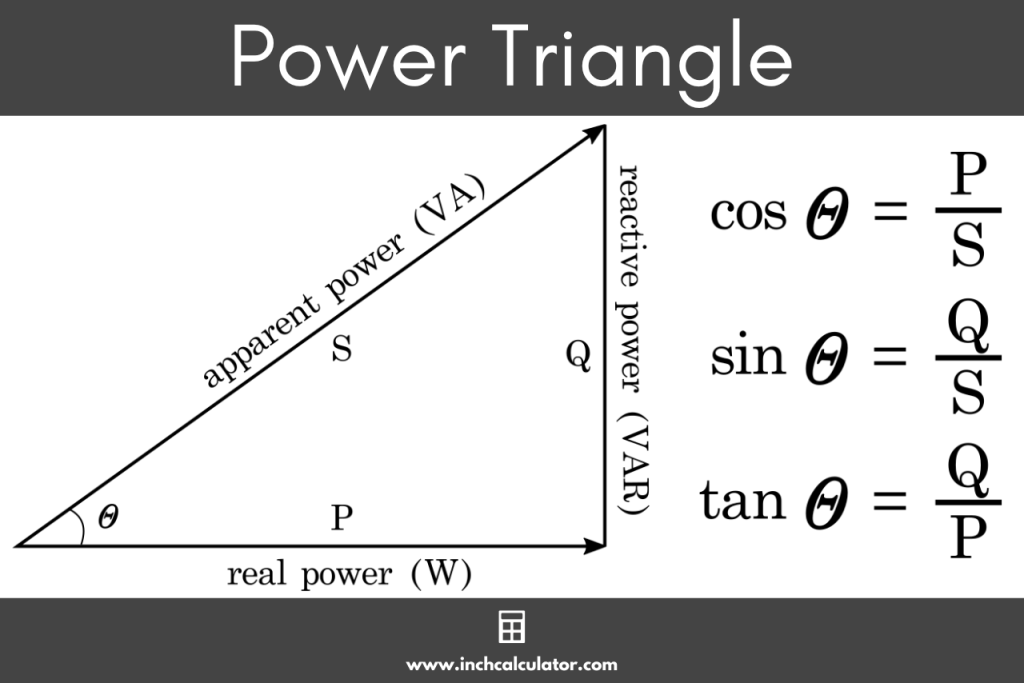
Understanding power factor starts with simple physics and extends into complex policy and economic implications. A power factor calculator helps translate electrical measurements into readable metrics: the ratio of real power used to do work, to apparent power supplied. A low power factor signals inefficiency — increased losses, higher demand charges, and stress on infrastructure. Using a power factor calculator regularly allows organizations to benchmark performance, design corrective measures, and compare alternatives with confidence, making it a hinge between technical diagnostics and program-level impact.
What is a Power Factor and Why Use a Power Factor Calculator?
Power factor is the ratio between real power (measured in watts or kilowatts) and apparent power (measured in volt-amperes or kilovolt-amperes). In mathematical terms:
PF = P / S,
where P is real power and S is apparent power. A power factor calculator automates this computation and often offers related calculations — reactive power, phase angle, and correction capacitor sizing — which are crucial for diagnosing power quality and making targeted improvements.
Electric motors, fluorescent lighting, and many industrial devices draw reactive power in addition to real power. Reactive power does not perform useful work but contributes to apparent power, inflating current and losses. A power factor calculator quantifies this inefficiency so technical teams can prioritize corrective actions. For utilities and policymakers, aggregated outputs from many power factor calculators across consumers inform demand-side management strategies, tariff design, and tailored state-level programs.
Brief History: Power Factor from Early Utilities to Modern Energy Policy
The concept of power factor emerged alongside the electrification era when utilities noticed that customers with large motor loads required more current for the same useful output. Early engineers used rudimentary instruments to measure current, voltage, and phase difference; the power factor calculator in those days was a manual table or slide rule. With digital measurement and computing, the modern power factor calculator provides instant, accurate results, integrating with energy management systems, supervisory control, and data-logging platforms.
As energy policy evolved, power factor moved from purely technical discussion to a core element of efficiency programs. Governments and regulators introduced regulations and tariff structures that penalize persistently low power factor and reward corrective measures. In many jurisdictions, state-wise benefits — such as subsidies for compensation capacitors or technical assistance for rural electrification projects — include power factor improvement as a measurable outcome. A power factor calculator therefore serves not only engineers but also program evaluators who need reliable evidence for funding and scaling initiatives.
Objectives of Using a Power Factor Calculator
A power factor calculator serves multiple objectives:
- Measure: Provide an accurate, repeatable metric of electrical efficiency for a single device, a panel, or a whole facility.
- Diagnose: Identify loads or times when reactive power is excessive and contributes to low power factor.
- Plan Correction: Size capacitors or specify active power factor correction devices.
- Monitor Compliance: Maintain records for regulators or utilities where penalties or incentives depend on PF.
- Optimize Policy: Aggregate data from many power factor calculators to guide state-level energy programs, rural development, and social welfare initiatives.
These objectives link technical practice to policy outcomes. For instance, when a rural electrification program uses power factor calculators to baseline pump-set efficiency, the measured improvements can be used to justify continued funding or to design women empowerment schemes that rely on affordable, reliable electricity.
How a Power Factor Calculator Works — Inputs, Outputs, and Interpretation
A modern power factor calculator typically accepts the following inputs: line voltage (V), line current (I), and active power (P). Derived quantities include apparent power S = V × I (in single-phase systems) or S = √3 × V × I in three-phase systems, reactive power Q = √(S² − P²), and phase angle φ, where PF = cos(φ).
Example numeric calculation:
Suppose an industrial motor system shows:
Real power P = 15.0 kilowatts (kW).
Line-to-line voltage V = 400 volts (V).
Line current I = 28.9 amperes (A) in a three-phase connection.
First compute three-phase apparent power S:
S = √3 × V × I.
Take √3 ≈ 1.732.
Compute 1.732 × 400 = 692.8.
Then 692.8 × 28.9 = 20,021.92 volt-amperes, or approximately 20.02 kilovolt-amperes (kVA).
Now compute PF = P / S = 15.0 kW / 20.02 kVA ≈ 0.75.
A power factor calculator would report a PF of about 0.75 and indicate the facility requires correction.
Using a power factor calculator avoids manual mistakes in unit conversions and ensures consistent reporting across time and sites.
Types of Power Factor Calculators: Tools for Different Users
Power factor calculators come in various forms:
- Online calculators: Web-based tools where users type in P, V, and I and get instant PF and Q values. These are handy for quick checks and design estimations.
- Mobile apps: Handy for field technicians to input readings, save time-stamped records, and run simple diagnostics.
- Handheld meters: Portable devices that measure V, I, and P directly and compute PF on the spot; valuable for field verification.
- Integrated facility software modules: Part of larger energy management suites, these aggregate data from multiple meters and provide trending, alerts, and automated recommendations.
- Spreadsheet templates: Customizable calculators for engineers who want full transparency over the formulas and audit trails.
Each type of power factor calculator offers trade-offs. Online calculators are accessible and easy, but handheld meters and integrated systems provide real measurements rather than reliance on user-entered values. For policy planning and state-level programs, aggregated digital outputs from integrated systems and handheld meters provide verifiable evidence for funding and incentives.
Practical Walkthrough: Using a Power Factor Calculator for an Industrial Site
To use a power factor calculator effectively at an industrial site, follow these steps:
- Baseline measurement: Measure and record P, V, and I at different loads and times to capture variations. A reliable power factor calculator should be used at peak and off-peak times.
- Analyze patterns: Determine if low PF is constant or associated with specific equipment or operational modes.
- Size correction equipment: Use the power factor calculator's capacitor sizing or active correction feature to propose the right solution.
- Implement correction: Install capacitors (fixed or switched), active PFC units, or synchronous condensers as required.
- Verify and monitor: Use the power factor calculator to confirm the PF post-installation and continue periodic monitoring to catch drift or equipment failures.
This structured approach ensures the power factor calculator becomes part of a cycle of measurement, action, and verification — essential for lasting gains.
Economic Benefits: How a Power Factor Calculator Drives Savings
The financial rationale for using a power factor calculator is clear. Improved power factor reduces current for a given real power, lowering transmission losses, reducing heat and stress on cables, and lowering demand charges — especially where utilities levy penalties for low PF. Savings arise from:
- Lower energy losses in distribution and transformers.
- Avoided capacity upgrades by reducing apparent demand.
- Reduced utility penalties and more favorable tariff classification.
- Improved equipment life and reliability due to lower thermal stress.
Firms that use a power factor calculator to target corrections typically see payback on capacitor investments in months to a few years depending on electricity tariffs and hours of operation. At the macro level, aggregated benefits from many corrected facilities reduce the peak load on the grid and create space for additional consumers, adding social value in terms of improved service and reliability.
Policy Framework and State-wise Benefits: Where the Power Factor Calculator Fits
Power factor correction is increasingly recognized in regulatory frameworks and energy-efficiency policies. Utility regulators often include PF thresholds; customers below these thresholds face penalties, while incentives or subsidies may be available to finance correction equipment. From a state-wise perspective, governments incorporate PF improvement into programs for industrial competitiveness and rural development. Examples of how a power factor calculator contributes to policy objectives include:
- State energy offices using aggregated PF measurements to prioritize investments in distribution strengthening, targeting areas with chronic low PF.
- Subsidies for rural pump-set retrofits often requiring before-and-after PF readings, verified through certified power measurements and a power factor calculator.
- Women empowerment schemes that include electrification or productive-use appliances requiring reliable energy quality metrics to ensure small businesses can function; a power factor calculator helps demonstrate reliability improvements that underwrite training and microcredit.
When policy frameworks explicitly tie grants or subsidies to measurable outcomes, the power factor calculator becomes central to quantifying impact and unlocking funds.
Regional Impact and Rural Development: Practical Linkages
Improving power factor at the regional level yields system-wide dividends. In many regions, especially those with agriculture-dependent economies, inefficient pump-sets with poor power factor impose a heavy burden on local distribution networks. Deploying power factor calculators to measure baseline conditions, then implementing targeted corrections, yields multiple outcomes:
- Reduced transformer loading and lower technical losses for the distribution company.
- More reliable voltage for households and microenterprises, enabling expanded production.
- Decreased outages and maintenance costs, allowing utilities to reallocate resources to service improvements.
- Support for rural development programs, where improved electricity quality helps women-led enterprises thrive — from food processing to tailoring — thereby linking technical measurement to social welfare initiatives and women empowerment schemes.
For policymakers, the ability to quantify these gains with a power factor calculator strengthens the case for scaling interventions across districts or states.
Gender and Social Dimensions: Women Empowerment Schemes and the Role of Measurement
Energy access is a cornerstone of gender equity. When electrification programs incorporate attention to power quality — as measured and monitored with robust meters and standardized protocols — the outcomes for women can be significant. Reliable, high-quality power ensures that productive-use equipment in women-led microenterprises runs effectively, reduces downtime, and increases incomes. Specific ways technical measurement ties into women empowerment schemes include:
- Training: Women technicians and community energy managers can be trained to use measurement tools, promoting skill development and local employment.
- Verification: Micro-enterprise grants can require power quality verification using standard devices to ensure fair disbursal.
- Sustainability: By ensuring electrical systems are efficient, operational costs for small enterprises often run by women decline, contributing to more sustainable livelihoods.
Integrating technical tools into social welfare and gender-focused programs amplifies both economic and social returns.
Implementation at Scale: Institutional Roles and Capacity Building
Scaling power factor correction requires institutional coordination. Key stakeholders include utilities, regulators, state energy offices, manufacturers, and local community organizations. A clear measurement protocol is one of the simplest instruments that bridges technical measurement and policy compliance. Institutional steps include:
- Capacity building: Training engineers and technicians to reliably use handheld meters and analysis tools, and to interpret results.
- Standards: Defining measurement protocols so data from multiple devices are comparable across sites and time.
- Financing: Designing subsidies or concessional finance for correction equipment that require verified PF improvement.
- Monitoring: Integrating outputs into dashboards for state-level monitoring and reporting, ensuring transparency for social welfare programs.
Strong institutional arrangements amplify the impact of individual measurements by turning discrete data points into policy-grade evidence.
Success Stories: Realistic Examples of Impact
While program names vary across countries and states, there are numerous realistic examples where accurate measurement and corrective action led to tangible improvements:
- Industrial park retrofit: An industrial park used handheld meters and integrated meters to identify low-PF clusters; installing switched capacitor banks increased the average PF from 0.72 to 0.96, reducing transformer loading and cutting demand charges significantly.
- Rural pump-set program: A district-level rural development program baselined agricultural pump performance using field meters. After retrofits and capacitor installations, farmers reported steadier voltage and reduced breakdowns, allowing women’s cooperatives to operate small mills during evening hours.
- Municipal service improvement: A municipal water utility used data to justify replacing aged asynchronous motors with high-efficiency units and installing centralized correction, which extended equipment life and improved service continuity.
These illustrative examples show how measurement tools are a small but powerful component of larger interventions that link technical fixes to economic and social outcomes.
Challenges and Common Pitfalls
Despite the benefits, several challenges hinder effective use of measurement and correction:
- Measurement errors: Incorrect configuration, transient readings, and improper averaging can lead to misleading PF values. Training and measurement protocols help.
- Overcompensation: Installing oversized capacitors without considering harmonic distortion or resonance can create new power quality problems.
- Funding constraints: Upfront costs for correction equipment deter small enterprises; blending finance and results-based incentives tied to verified outputs can help.
- Behavioral barriers: Operators may not prioritize PF improvement without clear financial incentives or regulatory pressure.
A thoughtful approach integrates measurement into broader energy audits, technical training, and financial instruments to overcome these obstacles.
Comparing Power Factor Correction with Other Efficiency Measures
Power factor correction complements, rather than replaces, other energy efficiency measures. Compare and contrast:
- Power factor correction vs. motor replacement: PF correction reduces apparent demand quickly and cheaply; motor replacement (with high-efficiency motors) reduces real power consumption. Ideally, both are combined for maximal impact.
- PF correction vs. lighting upgrades: Lighting upgrades (e.g., LED retrofits) reduce real power consumption directly and improve end-user experience. Accurate measurement helps ensure that lighting loads are not inadvertently causing PF issues.
- PF correction vs. demand-side management (DSM): DSM includes load shifting and peak shaving; PF correction reduces apparent load but does not lower actual energy consumed. Integrating measurement with DSM planning ensures comprehensive load management.
Decision-makers should consider measurement-driven analysis as part of a toolkit, using it to identify where PF correction is the most cost-effective action among alternatives.
Technical Considerations: Harmonics, Measurement Standards, and Safety
A robust power factor improvement programme considers harmonics and measurement quality. Non-linear loads (like variable speed drives and many electronic devices) produce harmonic currents that alter apparent power calculations. A basic power factor calculator may not account for distortion power factor; advanced meters and analytics can separate displacement (cos φ) from distortion power factor, giving a clearer picture for correction.
Measurement standards and safety are essential. Always follow local electrical codes, use properly rated instruments, and ensure live testing is done by trained personnel. When used for compliance, measurement must be part of an audited process to ensure regulatory acceptance.
Future Prospects: Smart Grids, IoT, and AI-driven Tools
The future of power factor management is digital and integrated. Trends to watch:
- IoT-enabled meters that stream data to cloud platforms with embedded power factor analysis algorithms.
- AI-driven analytics predicting PF drift and automatically recommending or actuating correction.
- Integration with distributed energy resources where PF considerations are crucial for inverter settings and grid stability.
- Microgrids and community energy systems where aggregated PF from many users is optimized centrally using real-time feeds.
These innovations will make PF management more proactive, linking technical optimization directly to policy goals like rural development and improved social welfare delivery.
Practical Checklist for Organizations Deploying Measurement and Correction
For organizations seeking practical steps:
- Establish a measurement protocol and select instruments that meet accuracy and logging requirements.
- Baseline under different operational conditions, recording P, V, I, and PF.
- Prioritize corrections by payback analysis using verified data.
- Implement with safety and harmonics in mind; consult specialized vendors for active PFC if non-linear loads dominate.
- Monitor and report improvements; use outputs to support applications for state incentives or inclusion in social programs.
Procurement, Monitoring, and Finance: Operational Details
Procurement and vendor evaluation often pose practical hurdles. Clear technical specifications should define measurement accuracy requirements, relevant standards compliance (such as IEC/IEEE where applicable), nominal voltage ranges, and logging capabilities. Vendors should provide demonstration units and references from installations of similar scale. Maintenance contracts are equally important: specify periodic verification, firmware updates, and prompt replacement clauses for failed components. For community-level projects, include clauses requiring local training and documentation handover.
A reliable monitoring framework clarifies responsibilities. Delegate daily or weekly checks to site technicians, monthly aggregated reviews to supervisory engineers, and quarterly audits for state-level reporting. Data aggregation should standardize sampling intervals — for example, 15-minute averages provide a good balance between granularity and data volume for trending and billing reconciliation. Longer intervals can hide transient events; shorter intervals may create noisy datasets that obscure meaningful trends.
Financing models that pair a modest upfront grant with a performance-linked loan often reduce default risk and improve adoption. Consider a simple financial example to illustrate payback calculations: imagine a medium-size facility buys a capacitor bank for a purchase price of $3,600. Annual savings from reduced demand charges and losses are projected at $1,200 per year. To compute payback period, divide the upfront cost by the annual savings. Thus 3,600 divided by 1,200 equals 3 years. Breaking it down: this simple arithmetic shows how a relatively small capital outlay can yield predictable returns that justify public or private support.
Community engagement remains vital. Field demonstrations, local champions, and transparent sharing of measured improvements help overcome skepticism. Linking the technical narrative to local priorities — such as reduced outages during key work hours or lower maintenance expenses for municipal pumps — turns abstract numbers into relatable benefits. When women’s self-help groups or cooperatives see clear meter readouts and post-intervention reports, they are more likely to advocate for scaling initiatives that improve livelihoods.
Finally, build a feedback loop: use meter-derived insights to refine procurement specs, update training content, and improve the targeting of subsidies. Over time, this institutional learning converts a single technical tool into a programmatic advantage that accelerates electrification, supports rural development, and strengthens social welfare delivery mechanisms.
Capacity Building, Training, and Long-term Sustainability
Training programs that certify local technicians build long-term resilience: curriculum combining measurement best practices, safety, and basic data analytics enables local stakeholders to interpret meter logs and identify improvement opportunities. In smart-city contexts, integrate meter feeds into municipal dashboards for real-time alerts tied to maintenance workflows. These steps ensure that investments deliver continuous returns and that technical tools become enduring assets for communities and businesses.
Sustained attention to measurement and local capacity turns technical interventions into lasting social gains.
Frequently Asked Questions
Q: What inputs do I need for a power factor calculator?
A: Typical inputs are active power (P), voltage (V), and current (I). For three-phase systems, ensure you use line-to-line voltage and the correct multiplier (√3) when computing apparent power.
Q: Can a power factor calculator handle harmonic distortion?
A: Basic calculators compute conventional PF (P/S) which assumes sinusoidal conditions. Advanced meters and calculators can report distortion and separate displacement and distortion power factors.
Q: Will correcting power factor reduce my energy consumption?
A: Power factor correction reduces apparent power and losses and can lower demand charges, but it does not directly reduce the real energy consumed by inefficient equipment. Combining PF correction with efficiency measures yields larger energy savings.
Q: How often should I use measurement tools for monitoring?
A: Use them during baseline audits, after corrective action, and periodically (monthly or quarterly) depending on operational variability and regulatory requirements.
Q: Are there safety concerns when performing field measurements?
A: Yes. Always use properly rated meters, follow local electrical codes, and have trained personnel perform live measurements. Incorrect procedures can be hazardous.
Q: Can small businesses benefit from PF correction?
A: Absolutely. Small businesses with motors or heavy-duty equipment often suffer from low PF; measurement helps identify cost-effective corrections which can improve profitability.
Q: How do measurement outputs support state-level incentives?
A: They provide verifiable measurements needed for outcome-based funding and reporting, enabling state programs to quantify improvements in distribution efficiency, service quality, and social program outcomes.