
Alright, let’s dive in—you’re here because you want to really get payment calculators: what they are, how they tick, which one fits your situation, how to make the most of them, and even how to whip one up if you’re into that kind of thing. I looked at how the best resources break down calculators for things like mortgages, loans, amortization schedules, and tools for extra payments, then reshaped their ideas into something fresh and easy to follow. It’s all about being helpful, whether you’re eyeing a new home, figuring out a car loan, or tinkering with a basic EMI tool. Skip the dry math lessons—this is hands-on, easy to search through, and loaded with terms people actually look up, like mortgage payment calculator, EMI calculator, amortization schedule, APR, extra payment calculator, and loan payoff planning.
What a Payment Calculator Actually Is (and Why It Matters)
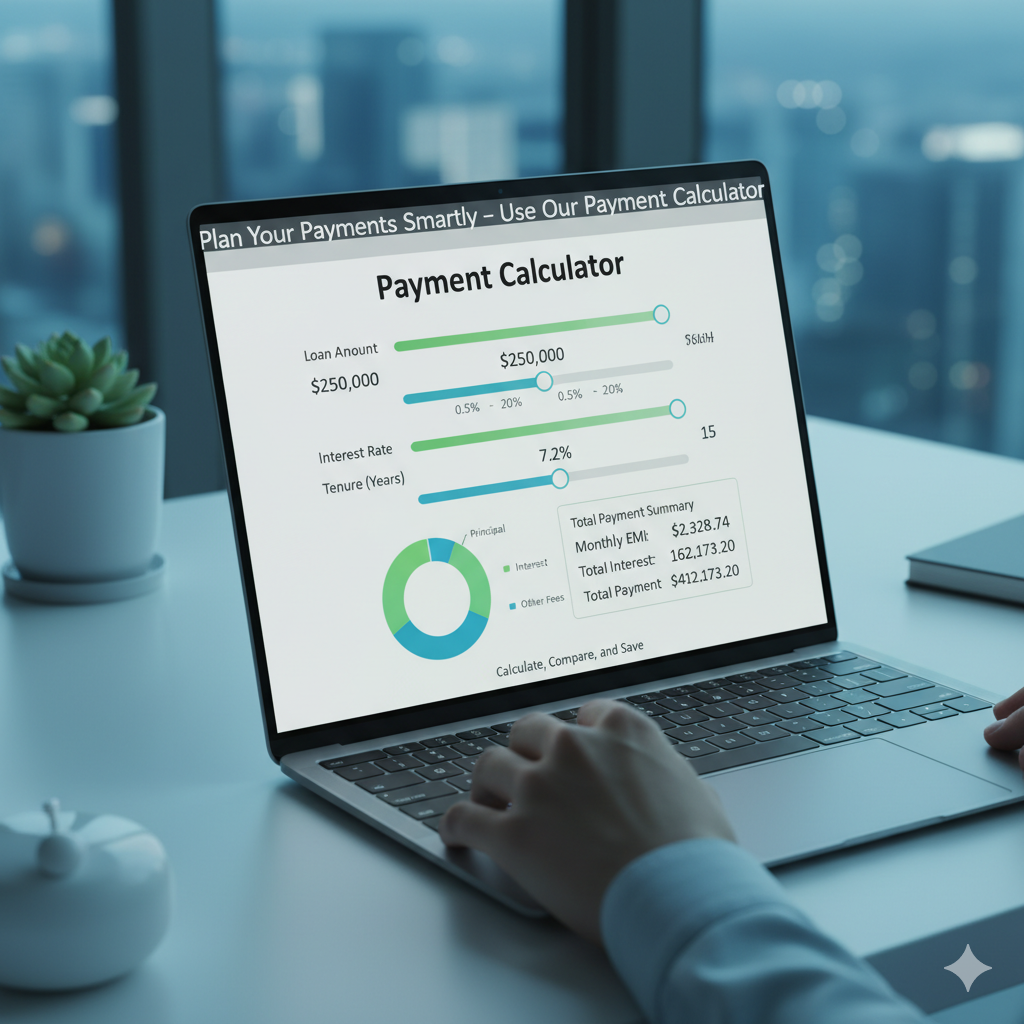
A payment calculator is basically a handy tool that takes all those financial details—like the principal amount, interest rate, loan term, how often you pay, plus stuff like taxes, insurance, fees, and any extra payments you might throw in—and turns them into a straightforward plan. It shows you what you’ll owe each period, the total interest you’ll shell out over time, and when you’ll finally be done with the loan. It helps answer those big questions that keep you up at night: Can I really afford this house? What if I toss in an extra $50 every month—how much quicker will I pay off the mortgage? Or, what changes if I go with biweekly payments instead?
These calculators are around because, let’s face it, most of us aren’t great at crunching compound interest or amortization in our heads. They take those tricky formulas and simplify them into a few fields to fill out, spitting out an easy-to-read amortization schedule. That makes big decisions feel less overwhelming and more like a smart strategy. Different ones cater to specific needs: mortgage versions factor in property taxes and PMI, auto loan ones might include trade-in values or special term deals, and basic loan calculators just figure out equal payments over a set time.
Key Competitor Headings You’ll See Around the Web (and What They Mean)
How to calculate your payments using a mortgage calculator—this breaks down the basic mortgage formula and how it splits between principal and interest.
How a mortgage calculator can help you—this usually covers budgeting and planning angles, like checking affordability, comparing terms, strategizing down payments, and seeing how rates affect things.
How to use a mortgage calculator—step-by-step guides for entering home value, down payment, interest rate, loan term, property taxes, insurance, and PMI to get an estimate of your monthly payments.
Amortization Calculator—a more in-depth tool that gives you a complete amortization schedule, including each payment’s principal and interest breakdown, plus running totals over time.
Monthly Payment Calculator—a straightforward, all-purpose form for any loan that estimates your regular payments based on rate, term, and principal.
Extra Payment / Early Payoff Calculator—lets you see how adding extra amounts monthly or as lumps can cut down on interest and shorten the loan term.
These headings point to the real stuff you care about: your basic payment amount, a detailed amortization breakdown, tweaks for payment frequency, and ways to plan for paying it off sooner. I’ll break each one down next so you can actually put them to work, not just skim over them.
The Core Math (but Explained Like a Person, Not a Calculator)
Deep down in most payment calculators for loans that amortize—like mortgages, car loans, or personal ones—is this standard formula for fixed payments:
M = P * r * (1 + r)^n / ((1 + r)^n − 1)
Where:
M is your payment each period,
P is the principal (that’s the amount you’re borrowing),
r is the interest rate per period (take the annual rate and divide by how many payments you make a year),
n is the total number of payments (years times payments per year).
It might look intimidating at first, but all it’s doing is figuring out a payment that covers the interest for that period while also knocking down some of the principal, so everything balances out to zero by the end. Pop that into a spreadsheet or a quick script, and you’ve got your monthly figure. You can tweak it for weekly or biweekly setups, interest-only loans (where payments just handle the interest until the very end), or ones with balloon payments (small ongoing ones plus a huge final payout).
For loans that don’t amortize, like credit cards or lines of credit, the math shifts to handle variable rates or minimum payments, so those need a different approach—but a lot of modern calculators have options for them too. If you want to make it feel more real, amortization tables and graphs help because you can actually watch how the interest and principal portions shift as time goes on.
Common Types of Payment Calculators and When to Use Each
Mortgage Payment Calculator
This one’s packed with features: loan amount, interest rate, term, property taxes, homeowner’s insurance, HOA fees, and PMI if your down payment’s less than 20%. It’s perfect when you’re shopping for a house or thinking about refinancing—it gives you monthly payments and highlights how taxes and insurance play into your budget. You can also switch up the term, like 15 versus 30 years, to weigh the trade-offs between interest and payment size.
Loan / EMI Calculator
Great for car loans, personal loans, or business ones. You plug in principal, annual interest rate, term, and how often you pay. EMI versions spit out your monthly payment and total interest. They’re quick and simple, ideal for checking if something’s affordable.
Amortization Calculator
This outputs a full schedule with every payment: the number, interest part, principal part, and what’s left on the balance. It’s your best bet for long-term planning or keeping track for taxes, since early payments on things like mortgages are mostly interest.
Extra Payment / Early Payoff Calculator
Lets you experiment with scenarios, like adding $50 monthly or dropping a $5,000 lump in year three, and see the interest savings and how much time you cut off the loan. This is key for fine-tuning how you pay it off.
Biweekly Payment Calculator
Going from monthly to biweekly can sneak in an extra full payment yearly (26 half-payments equal about 13 months’ worth), shortening the loan and trimming interest. Use this if your lender does real biweekly handling.
Interest-Only and Balloon Payment Calculators
These help model loans where you pay just interest for a stretch or have a big balloon at the end. They’re useful for things like commercial real estate or unique financing setups.
Payment calculators are flexible: choose one that fits your loan’s setup, and you’ll get a solid forecast. For most folks, starting with a mortgage or EMI one, adding an amortization view, and throwing in extra-payment scenarios covers everything practical.
How to Use a Calculator Like a Pro (Not Just Hitting “Calculate”)
Start by rounding up the right details: the precise loan amount (or purchase price minus down payment), interest rate (annual percentage, ideally not APR), payment frequency, term, and any ongoing fees like taxes, insurance, or HOA. If you’re shopping around offers, note points and lender fees that impact APR too.
Next, try baseline runs: the straight monthly payment at the given rate; the same loan but with a 0.5% lower rate; or with a shorter term like 15 instead of 30 years. This reveals how much rates and terms sway your payment.
Then, play with extras: bump up by a little recurring amount, say $25 to $100, and see what happens. Even small additions can slice years off a long mortgage.
After that, dive into amortization for tax and cash flow planning: early payments lean heavy on interest, so if you’re aiming to max out deductions where it makes sense, these tables show yearly interest amounts.
Finally, think about the bigger picture: how the payment meshes with property taxes, upkeep, insurance, and your saving goals. A calculator’s great, but it’s just part of your overall budget.
Payment Frequency Matters More Than You Think
Monthly, biweekly, weekly—each option tweaks how interest compounds. Lots of mortgage calculators default to monthly; if you switch to biweekly, adjust the annual rate to match the per-period one. Real biweekly plans can add that extra payment yearly and speed things up. But watch out: some lenders do “biweekly-like” where they hold your first half and apply it later—that doesn’t save on interest. Always double-check with your lender on how they handle biweekly before jumping in.
APR, Nominal Rate, and Why You Should Care About Fees
The nominal interest rate is what ads usually highlight, like 4.5%. APR rolls in some fees and points to give an annualized true cost. A loan with a tad lower nominal rate but steep origination fees might end up worse than one with a slightly higher rate and no fees. Solid calculators take APR directly or let you add fees to compute a real comparative APR for fair comparisons.
When refinancing, always figure the break-even: how many months until monthly savings cover the refinance costs? Calculators can show that—if you’ll move before then, it might not pay off.
Extra Payments: the Tiny Change That Compounds Into Huge Savings
Tacking on extra to the principal monthly is one of the smartest moves to slash interest. Since interest hits the remaining principal, even modest extras lower future charges right away. Use an extra-payment tool to compare: $50 more each month versus a single $5,000 lump versus $200 yearly one-offs. Often, steady small extras win over big one-time drops because they hit the principal sooner.
If your loan has prepayment penalties, crunch the numbers: penalties can wipe out savings, so it might not be worth it. Good calculators factor in those penalties.
Building a Payment Calculator: Small Dev Guide (for Frontend Nerds)
If you’re up for creating a solid payment calculator, here’s what to nail on the UX and tech side:
Inputs: principal, annual rate (or APR with fees), term in years, payments per year, extra payments (monthly or lumps), start date, and optional ongoing fees like taxes or insurance.
Validation: Make sure rates are numbers over zero, terms are whole numbers, down payments don’t exceed the price, and handle APR versus fees without overlap if you’re auto-calculating APR.
Core formula: Code up the annuity equation for periodic payments; add a loop for amortization to break down each payment and track balances.
Extra payments: Support recurring monthly ones and dated lumps; have the loop apply them before calculating interest for that period.
Frequency conversion: Turn annual rates into per-period by dividing by payments per year; only bother with continuous compounding if your scenario really needs it.
Edge cases: Decide early if you’ll handle interest-only phases, balloons, negative amortization, or variable rates.
Output: Periodic total payment, overall interest, amortization table, time saved with extras, and payoff date. Add visuals like bar charts for principal versus interest and timeline graphs to make it pop.
Accessibility & mobile: These get a lot of phone use, so keep inputs big and easy to tap, and let users save scenarios via URL.
A bit of JavaScript, an amortization loop, and some charts from a library like Chart.js can get you a polished tool in a day if you’re familiar.
UX Writing: the Copy That Makes Calculators Useful
A calculator flops if folks don’t get the inputs. Go with warm labels like “Loan amount (how much you’ll borrow)”, “Interest rate (annual)”, “Loan term (years)”, and hover tips for terms like “PMI” and “APR”. Throw in default examples, like 20% down for homes, and explain results simply: “Adding $100/month cuts your term by X years and saves $Y in interest.” Include heads-up for pitfalls, like “Check for prepayment penalties with your lender?” or “Biweekly might not work as expected.” Clear, simple words are key.
Real-Life Use Cases — How People Actually Use Payment Calculators
Homebuyers lean on mortgage calculators to cap their budgets and pit 15-year against 30-year plans. Car hunters use EMI ones for monthly fit and lease-versus-buy comparisons. Savvy debtors turn to extra-payment tools to sort payoff order across loans (avalanche or snowball methods). Small biz owners check loan calculators for cash flow on gear financing. The common thread: these tools make vague financial commitments into concrete schedules you can build around.
SEO & LSI Phrases Woven Through This Guide
I wove in the terms folks search for on purpose, so this hits various needs: payment calculator, mortgage calculator, loan payment calculator, EMI calculator, amortization schedule, extra payment calculator, early payoff calculator, biweekly payment calculator, APR vs interest rate, loan payoff plan, mortgage affordability calculator, refinance break-even calculator.
Common Mistakes People Make With Calculators (and How to Avoid Them)
Using the full price instead of loan amount: Don’t forget to subtract the down payment.
Mixing up nominal rate and APR: Add fees if the tool wants APR.
Overlooking ongoing costs: Taxes and insurance count big for mortgages.
Forgetting prepayment penalties: Review lender rules before extras.
Thinking biweekly always saves: Verify how the lender applies it.
Dodge these, and you’ll end up with a practical, real-world plan—not some pie-in-the-sky number.
How to Compare Two Loans Properly Using Calculators
For fair loan comparisons, run both with identical frequency and either nominal APR or explicit fees. Look at total interest over the same period and full costs with fees. For refis, find break-even months: fees divided by monthly savings. If you’ll stick around past that, it probably pays; otherwise, pass.
When Calculators Lie (and Why You Should Double-Check)
Online tools can mislead in cases like adjustable-rate mortgages with future shifts, balloon setups needing special math, or ones that bungle APR and periodic rates. Always verify big stuff with your own spreadsheet or a lender quote, and question calculators that skip fee or timing details.
Privacy & Data Tips When Using Online Payment Tools
Most calculators don’t need personal details—stick to that. Avoid entering real account numbers; use made-up ones. If one wants your email for results, think if you want your scenario saved. When building, skip logging user inputs unless essential—and if you do, spell out the privacy policy clearly.
A Short Checklist Before You Finalize a Big Financial Move
Confirm loan amount and down payment.
Run baseline payments and a cautious one (higher rate).
Test extra payment ideas for fit.
Check APR and fees; do refi break-even if it applies.
Verify lender policies (penalties, biweekly setup).
Save the amortization schedule as PDF and share with your partner or advisor.
This list cuts down on regrets and surprises.
FAQs — Tailored for “Payment Calculator” Users
What Is a Payment Calculator and How Is It Different From an Amortization Calculator
A payment calculator figures your regular payment from principal, rate, and term. An amortization one takes it further with a full list of every payment, splitting interest and principal, and showing balance drops. Use the basic for quick checks, the detailed for in-depth plans.
How Do I Calculate Monthly Payments Manually If I Want to Check a Calculator
Plug into the annuity formula: M = P * r * (1 + r)^n / ((1 + r)^n − 1), with r as monthly rate (annual divided by 12) and n as total months. If formulas aren’t your thing, a spreadsheet’s PMT function or amortization template does the trick.
Will a Biweekly Payment Plan Always Save Me Money on a Mortgage
Not necessarily. Real biweekly (26 halves applied right away) often saves because it’s like 13 full payments yearly. But if lenders just split monthly and hold halves, no savings. Ask how they apply it before signing up.
How Much Will an Extra $100 a Month Save Me on a 30-Year Mortgage
It varies by principal and rate, but roughly: on $300,000 at 4% for 30 years, $100 extra could trim years and save tens of thousands in interest. Punch your specifics into an extra-payment or amortization tool for exacts.
What’s the Difference Between APR and Interest Rate and Which Should I Use in a Calculator
Interest rate is the straight annual nominal. APR bundles in fees and points for a truer yearly cost. Use APR to compare offers fairly; nominal for clean payment calcs when fees are separate.
Can I Use a Payment Calculator to Decide Whether to Refinance
Absolutely. Compare current versus new, add closing costs to the refi, and find break-even (months for savings to cover costs). If you’ll stay longer, it might work. Weigh rate changes and penalties too.
Are Online Calculators Accurate Enough or Should I Get a Professional to Run Numbers
They’re spot-on for standard loans with good inputs. For tricky ones like ARMs, jumbos, commercial, or tax-heavy, talk to a lender or advisor for assumptions and fine print. Verify big calls with your spreadsheet or expert input.
Final Notes — Small Actions That Yield Big Wins
Payment calculators aren’t wizardry, but they’re mighty useful. Use them to weigh options, try small extras, and lock in affordability before diving in. If building one, focus on clear copy, solid formulas, and a strong amortization core. If using, save that schedule PDF and run best- and worst-case scenarios. Tiny tweaks—like $50 more monthly, dodging PMI, or picking 15 over 30 years—add up huge over time.