
A round bar weight calculator is a deceptively simple tool with outsized importance across metalworking workshops, construction projects, and planning offices. Whether you’re a civil engineer estimating materials for a bridge, an entrepreneur quoting a fabrication job, or a state planner assessing supply-chain efficiency for rural development, a reliable round bar weight calculator reduces waste, saves money, and improves accuracy. This guide explains what a round bar weight calculator does, why it matters, and how it connects to broader themes such as regional impact, policy framework, and state-wise benefits for small and medium enterprises.
Why a round bar weight calculator matters: objectives and scope
At its core the round bar weight calculator answers one practical question: how much will a given length of round bar weigh? The objective is straightforward, but the implications are wide. Precise weight estimates enable accurate costings, efficient transport planning, better inventory management, and cleaner sustainability accounting. For public policy makers interested in women empowerment schemes or social welfare initiatives focused on local manufacturing, the compact clarity of a round bar weight calculator helps quantify material needs, estimate subsidies, and measure program impact.
A modern round bar weight calculator supports both metric and imperial units, provides defaults for common materials (steel, stainless steel, aluminum, brass), and can integrate density lookup tables. It becomes part of a digital toolset that small workshops and micro-enterprises can use to professionalize bids, thereby amplifying state-wise benefits and contributing to rural development.
Historical context and evolution
The need to calculate the weight of metal bars predates digital tools. Traditional blacksmiths and early industrialists relied on rule-of-thumb tables linking diameter and length to weight. As industries standardized, engineering handbooks codified formulas and density values. The digital age added automated round bar weight calculator spreadsheets, web calculators, and smartphone apps that democratize access to accurate calculations, especially in regions where technical resources are limited.
Early calculators were simple tables; today’s calculators may be embedded in ERP systems, connected to procurement flows, and used in policy analysis to translate material requirements into budgets for state schemes.
How a round bar weight calculator works: formula, units, and accuracy
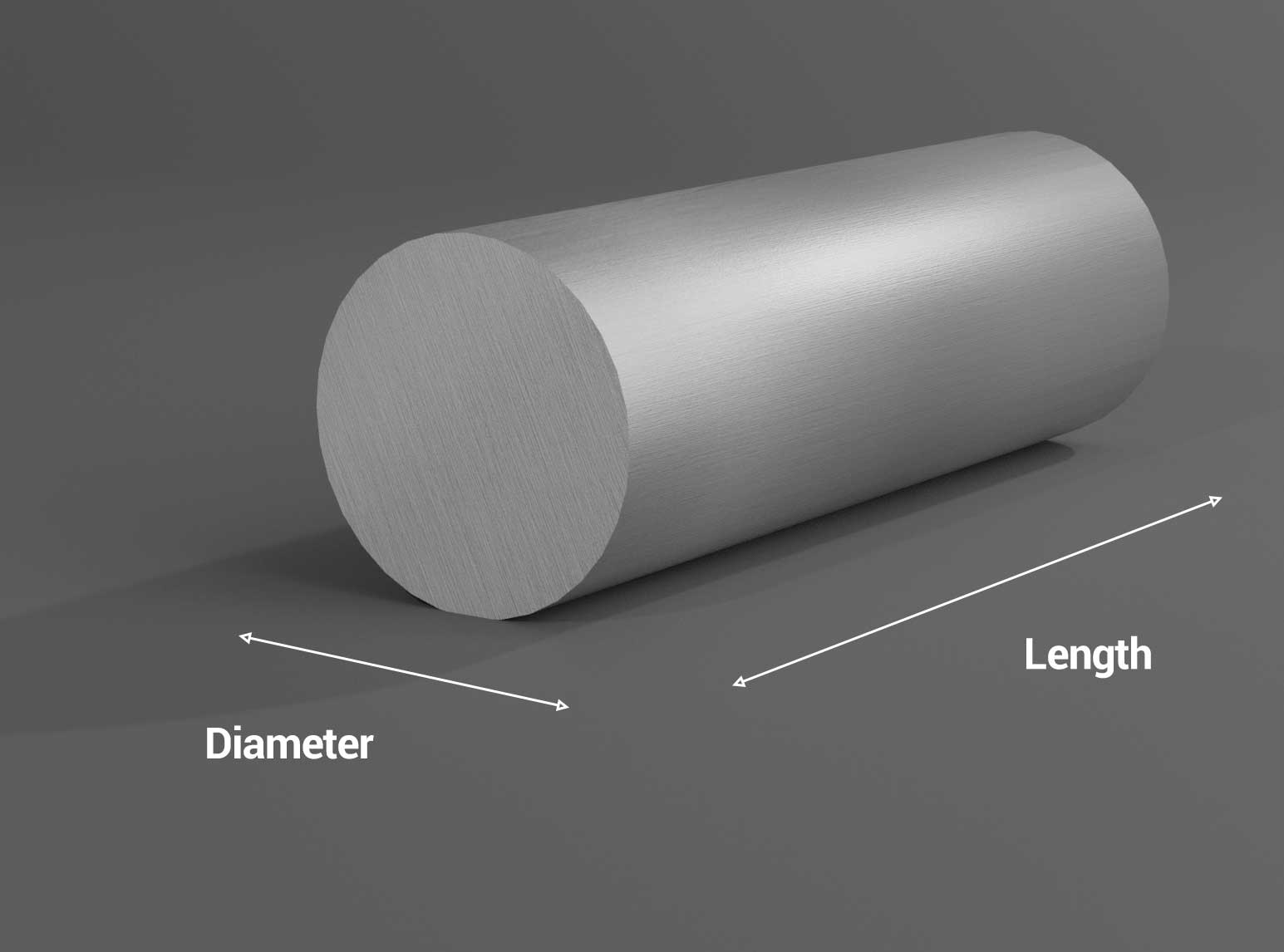
A robust round bar weight calculator uses the geometric volume of a cylinder and multiplies by material density. The fundamental formula is:
Weight = Area × Length × Density
Area (circle) = π × (Diameter²) / 4
So:
Weight = (π / 4) × Diameter² × Length × Density
When using metric units (diameter in meters, length in meters, density in kg/m³), the weight is produced in kilograms. With imperial units (diameter in inches, length in feet, density in lb/in³ or lb/ft³), appropriate conversion factors are applied to return pounds or tons.
A practical round bar weight calculator will:
- Accept diameter and length in mixed units (mm, cm, m, in, ft).
- Offer density presets: e.g., mild steel ≈ 7850 kg/m³, stainless steel ≈ 8000 kg/m³, aluminum ≈ 2700 kg/m³.
- Allow user-defined densities for alloy or cast materials.
- Provide answers with configurable precision (e.g., two or three decimal places).
Example calculations — step by step
To demonstrate the method that any round bar weight calculator uses, consider a commonly used example: a 10 mm diameter steel round bar, 1 meter long.
- Convert diameter to meters: 10 mm = 0.010 m.
- Compute cross-sectional area: π/4 × (0.010 m)² = 0.7853981634 × 0.0001 m² = 0.0000785398 m².
- Volume for 1 m length = area × length = 0.0000785398 m³.
- Multiply by steel density (7850 kg/m³): 0.0000785398 × 7850 = 0.61654 kg.
A simple round bar weight calculator automates those steps and returns 0.61654 kg for the example above.
Another practical example for an American workshop: a 1/2-inch diameter steel rod 12 inches long. A round bar weight calculator functioning in imperial units will convert units or use a formula variant to return the weight in pounds.
Tolerances, manufacturing realities, and calculator precision
Real-world metal does not always conform to exact diameters; drawing tolerances, mill scale, and surface finishes can affect mass. A good round bar weight calculator includes margin-of-error notes and allows margin inputs. For procurement in state-level projects, applying a small buffer (1–3%) can align estimates with real deliveries and reduce the risk of shortfalls.
Building and integrating a round bar weight calculator: practical implementation
Small shops often begin with paper tables or spreadsheets, but a professionally implemented round bar weight calculator can be deployed as:
- An Excel/Google Sheets template with unit conversions and drop-down material choices.
- A web-based calculator using JavaScript that engineers and foremen can bookmark.
- A mobile app for on-site estimations.
- An API integrated into inventory or procurement systems for government programs and tendering platforms.
A basic spreadsheet-based round bar weight calculator only needs the formula cell and cell references for diameter, length, and density. More advanced implementations include batch inputs (enter a list of diameters and lengths), cost-per-weight multipliers, and reporting exports for audits tied to rural development funding.
Example: Excel implementation (conceptual)
Set cells:
- A1 = Diameter (mm)
- B1 = Length (m)
- C1 = Material (select density)
- D1 = Density (kg/m³) (looked up from C1)
- E1 = Weight formula = PI()/4 * (A1/1000)^2 * B1 * D1
This simple layout becomes a portable round bar weight calculator for quick estimates.
State-wise impact and policy framework: how calculators support governance
It may seem surprising, but a round bar weight calculator intersects with public policy when governments procure or subsidize infrastructure and workshop modernizations. When designing state schemes for MSME support, tools that enable accurate material estimation help planners delineate precise budgets, reduce cost overruns, and evaluate the regional impact of manufacturing grants.
Regional impact and state-wise benefits
- Accurate tendering: State public works departments that rely on a round bar weight calculator for civil works can issue clearer tenders and reduce disputes.
- Targeted MSME support: By analyzing aggregated calculator outputs, states can identify material demand clusters and target women empowerment schemes or startup subsidies to the regions that need steel logistics.
- Rural development: A proliferated calculator installed on a mobile app allows artisans and rural fabricators to estimate materials without traveling to urban centers, thereby strengthening local supply chains.
Embedding the calculator in a policy framework encourages transparency: procurement estimates and actual consumption can be audited to measure the efficacy of social welfare initiatives tied to manufacturing.
Women empowerment and social welfare linkages
When technical tools like a round bar weight calculator become accessible to groups that have historically faced barriers—women-led cooperatives or rural self-help groups—the immediate benefit is economic empowerment. Accurate material estimates increase the success rate of bids for state contracts under women empowerment schemes. Social welfare initiatives that include technical training in simple calculators can multiply impact by reducing dependence on middlemen and boosting margins.
Success stories: business and social outcomes enabled by calculators
Across states and regions, there are numerous anecdotal but meaningful success stories where a round bar weight calculator improved outcomes:
- A small fabrication cooperative in a tier-2 city adopted a spreadsheet-based round bar weight calculator to price jobs. The shift from estimates by intuition to data-driven quotes increased margins by 8–12% and secured three municipal contracts.
- A rural mason training program integrated a mobile round bar weight calculator into its curriculum, allowing trainees to participate in state tenders with more confidence. This contributed to higher participation of women in construction roles under a state housing program.
- A state initiative to modernize village-level metalworking hubs distributed an offline round bar weight calculator app as part of a kit; audits reported reduced material wastage and improved procurement transparency.
These stories show that a simple calculation tool can have knock-on benefits: stronger businesses, better use of public funds, and measurable regional impact.
Challenges and limitations of round bar weight calculators
A round bar weight calculator is powerful but not infallible. Common challenges include:
- Material variations: Density can vary by alloy and heat treatment. Using default density values may introduce slight errors.
- Hollow vs. solid bars: Calculators must differentiate between solid round bar and hollow tubing; applying the wrong formula leads to major mistakes.
- Unit conversion errors: Misunderstanding mm vs. inches or meters vs. feet produces large miscalculations unless the calculator enforces unit sanity checks.
- Human factors: Overreliance on calculators without validation (e.g., cross-checking with weight tickets) can propagate systematic errors into projects and policy budgets.
Addressing these requires good user interface design, documentation, and training—especially important when the calculator is part of a state-wide program or a social welfare initiative.
Comparison with other bar weight calculators and tools
A true cost and performance review of calculators should compare the round bar weight calculator with other common tools.
Round bar vs. square bar and flat bar calculators
- Formula differences: Round bar calculators use circle area (πD²/4), square bar calculators use side², and flat bar calculators use thickness × width. The math is straightforward, but using the wrong formula is an all-too-common human error.
- Use cases: Round bar calculators are favored in reinforcement, fastener, and turned part estimations; square and flat bar calculators are common in platework, channel, and flat-stock fabrication.
- Conversion complexity: When cutting stock from one profile to another, an integrated tool that includes round, square, and flat calculators streamlines planning.
Round bar vs. tube and hollow profile calculators
- Tubing needs wall thickness input; a tube weight calculator uses outer diameter and wall thickness or inner diameter. A naive round bar weight calculator cannot substitute for tube estimation without modification.
- When inventory includes both solid and hollow items, an integrated suite that contains a round bar weight calculator plus tube and profile calculators is ideal.
Why a dedicated round bar calculator still matters
Specialization reduces error. Workshops dealing with turned parts or rebar primarily need a reliable round bar weight calculator that’s foolproof, which is why many apps and ERP modules include dedicated calculators along with contextual help.
Technical extensions and integrations: making the calculator smarter
A modern round bar weight calculator can evolve from a single-cell formula to an intelligent component in a fabrication or government digital ecosystem:
- Batch processing: Accept lists of diameters and lengths, compute total tonnage, and produce procurement-ready reports.
- Costing integration: Combine weight with material unit price, labor, and overhead to produce line-item quotations.
- Barcode/RFID tie-ins: Scan cut stock and auto-allocate weight to jobs for real-time inventory management.
- BIM/CAD integration: Extract lengths and diameters from CAD bills of materials to feed the round bar weight calculator automatically.
- AI and predictive analytics: Use historical consumption and seasonal demand to predict future needs and optimize state-level procurement, thereby reducing logistics costs and ensuring steady supply for rural development projects.
These enhancements make the calculator a decision-support tool, not just a number generator.
Developing a user-friendly round bar weight calculator: UX and accessibility
To maximize the social and economic benefits, a round bar weight calculator must be easy to use. Key design principles include:
- Clear unit labeling and auto-conversion.
- Material presets with brief definitions and edit capabilities.
- Inline help explaining why certain inputs matter—this supports skill-building in women empowerment schemes and rural training.
- Offline functionality for areas with limited internet, crucial for rural development and state-wise program implementation.
A calculator that aligns design with policy goals becomes an empowerment instrument.
Security, data governance, and public procurement
When governments adopt a round bar weight calculator as part of procurement, security and governance come into play. Data about quantities and supplier prices feed into budgeting and auditing—for this, calculators must support:
- Permissioned access and user authentication.
- Exportable audit trails to track how estimates were generated and by whom.
- Aggregation features that anonymize supplier data for public reporting, enabling transparency without exposing competitive details.
Such governance supports accountability in state spending and program evaluation.
Future prospects: AI, IoT, and industry trends
The future of the round bar weight calculator is tied to broader shifts in manufacturing and policy:
- AI-driven optimization can suggest stock purchases by analyzing demand patterns across regions and aligning them with state-wise benefits programs.
- IoT-enabled scales and RFID tags can automate actual weight measurement and reconciliation with calculated weights, reducing friction in logistics and social welfare deployment.
- Blockchain-based provenance could log material origin, grade, and weight, aiding quality assurance in public infrastructure projects connected with rural development efforts.
These directions suggest that the humble round bar weight calculator will remain relevant and increasingly integrated into digital ecosystems.
Implementation roadmap for governments and enterprises
To roll out a round bar weight calculator at scale, consider this phased approach:
- Pilot: Deploy a simple spreadsheet or mobile app with core functionality to a representative set of workshops and municipal teams.
- Feedback and training: Gather user feedback, refine unit handling, and deliver short training modules that align with women empowerment or rural development curricula.
- Scale: Integrate with procurement portals and ERP systems, provide offline packages for low-connectivity regions, and include multilingual help.
- Audit and iterate: Use procurement data to evaluate state-wise benefits and adjust buffer policies or tender specifications.
This roadmap balances speed and rigor, ensuring that the calculator moves from a technical tool to a policy instrument.
Measuring success: KPIs and impact assessment
Success metrics for a round bar weight calculator deployment should include:
- Reduction in material wastage (percentage saved).
- Improvement in bid accuracy and contract fulfillment rates.
- Increased participation in tenders by small and women-led enterprises.
- Time saved in estimation and procurement cycles.
- Cost savings realized in state projects attributable to more accurate material estimation.
Collecting these KPIs supports evidence-based policy decisions and justifies investment in training and tool maintenance.
Conclusion: the multiplier effect of a simple tool
A well-designed round bar weight calculator is more than a math helper; it is an enabling technology that improves commercial accuracy, strengthens procurement governance, and connects technical practice with social goals like women empowerment schemes and rural development. When embedded within a thoughtful policy framework, the calculator helps realize state-wise benefits and supports social welfare initiatives that depend on accurate material planning.
By focusing on accessibility, integration, and training, institutions can ensure that this small computational tool produces outsized regional impact.
Frequently Asked Questions
What is the formula used by a round bar weight calculator?
The standard formula multiplies the cross-sectional area of a circle (π × diameter² / 4) by length and material density. When units are mixed, a round bar weight calculator converts them first, then applies the formula to return weight in the chosen unit (kg, lb, etc.).
Which material densities are commonly included in a round bar weight calculator?
Common presets include mild steel (~7850 kg/m³), stainless steel (~8000 kg/m³), aluminum (~2700 kg/m³), brass (~8500 kg/m³), and copper (~8960 kg/m³). A robust round bar weight calculator allows users to add custom densities for specific alloys.
How do I account for hollow bars or tubes?
Hollow sections require inner diameter or wall thickness. A tube calculator variant subtracts the inner area from the outer area to compute the net cross-section. A standalone round bar weight calculator is for solid bars unless explicitly extended to handle hollow profiles.
Can I use a round bar weight calculator for procurement in state programs?
Yes. When deployed with proper documentation, buffers, and audit trails, a round bar weight calculator is a valuable procurement planning tool. It supports state-wise benefits and policy frameworks by improving estimate accuracy and enabling transparent reporting.
How accurate is a round bar weight calculator?
Accuracy depends on input precision (diameter, length), correct density selection, and adherence to unit conversions. Including small tolerance margins (1–3%) in procurement reduces risk. For critical engineering uses, always cross-check calculator outputs with certified material weight tickets.
Does the calculator support batch calculations for many bars?
Many modern round bar weight calculators accept CSV or spreadsheet uploads, enabling batch processing. Batch capabilities are crucial for inventory management, costings, and integrating with ERP systems for larger projects.
How does a round bar weight calculator support local development and women empowerment schemes?
By enabling precise material estimation, a round bar weight calculator professionalizes bids and reduces waste, allowing small and women-led enterprises to compete more effectively for state tenders and local contracts. Training programs that include such tools help build technical literacy that underpins rural development and social welfare initiatives.